Operational migrations
Database to database
Move tables between heterogeneous engines while mapping schemas, types, indexes, sequences, counters, and foreign keys as part of the same project.
Review supported databasesOmni Loader moves very large datasets across databases, cloud warehouses, and data lakes with parallel workers, adaptive tuning, and durable recovery.

 TargetBulk ingest
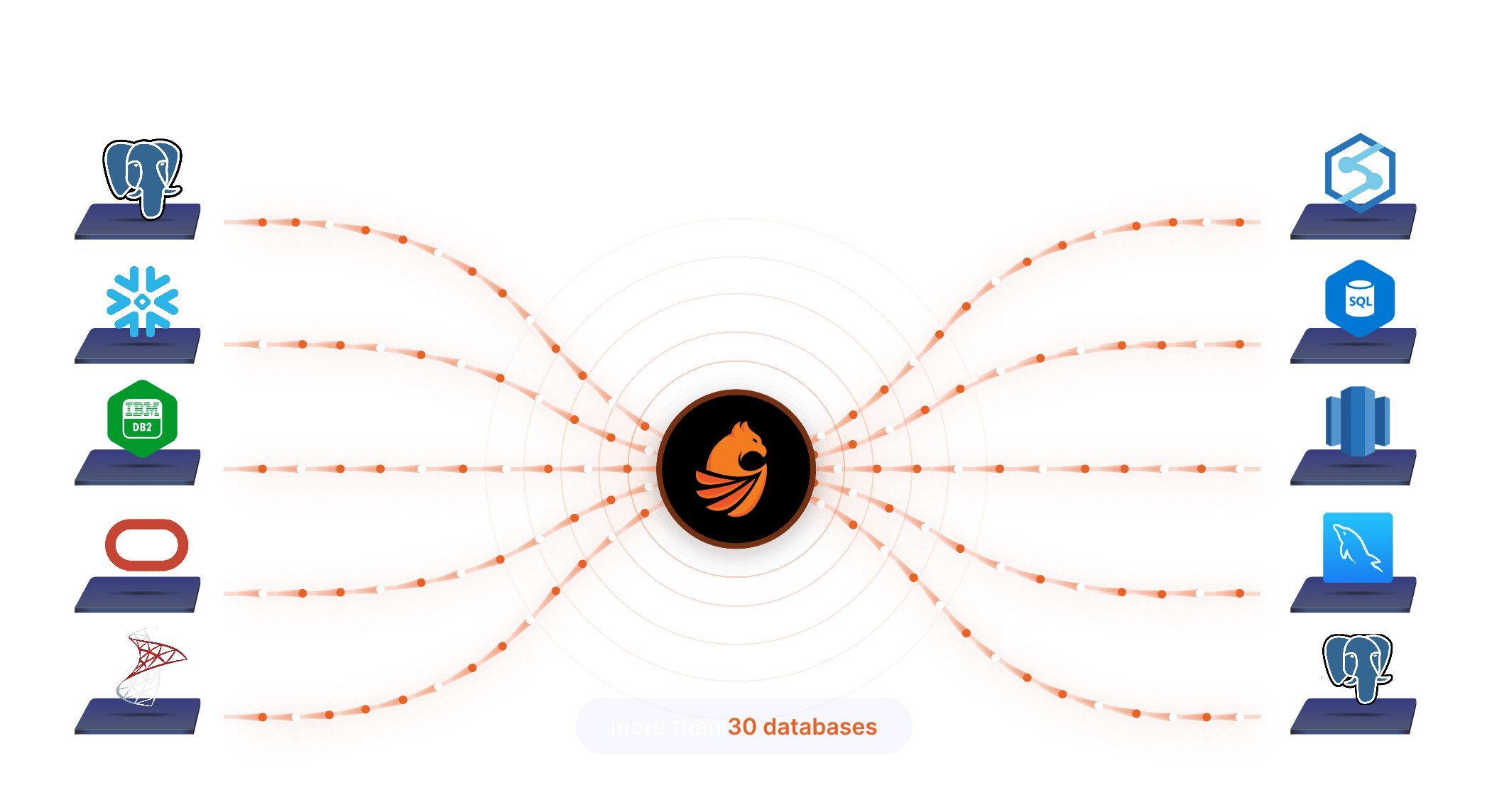
 Move between operational databases, warehouses, lakes, and files.
Use provider bulk APIs, multi-row SQL, direct writers, or native ingestion by target.
Retry unfinished tables and slices without restarting completed migration work.
Compare counts, table hashes, or records before the target is ready for cutover.
Built for the full load
Move tables, files, and large binary values without turning every migration into a custom engineering project.
Auto-slice large tables and move many objects concurrently without hand-built partition plans.
Restart unfinished work units instead of restarting a multi-terabyte migration.
Start with production-minded defaults, then override the exceptional tables precisely.
Prepare analytics-ready files and hydrate cloud destinations at the speed they ingest.
Plan target schemas, types, tables, indexes, sequences, counters, and foreign keys.
Choose provider bulk APIs, multi-row SQL, direct writers, or native ingestion by target.
Verify completed loads with counts, table hashes, or record-level comparison.
Persist added, changed, and deleted differences and optionally repair the target batch.
Parallel movement
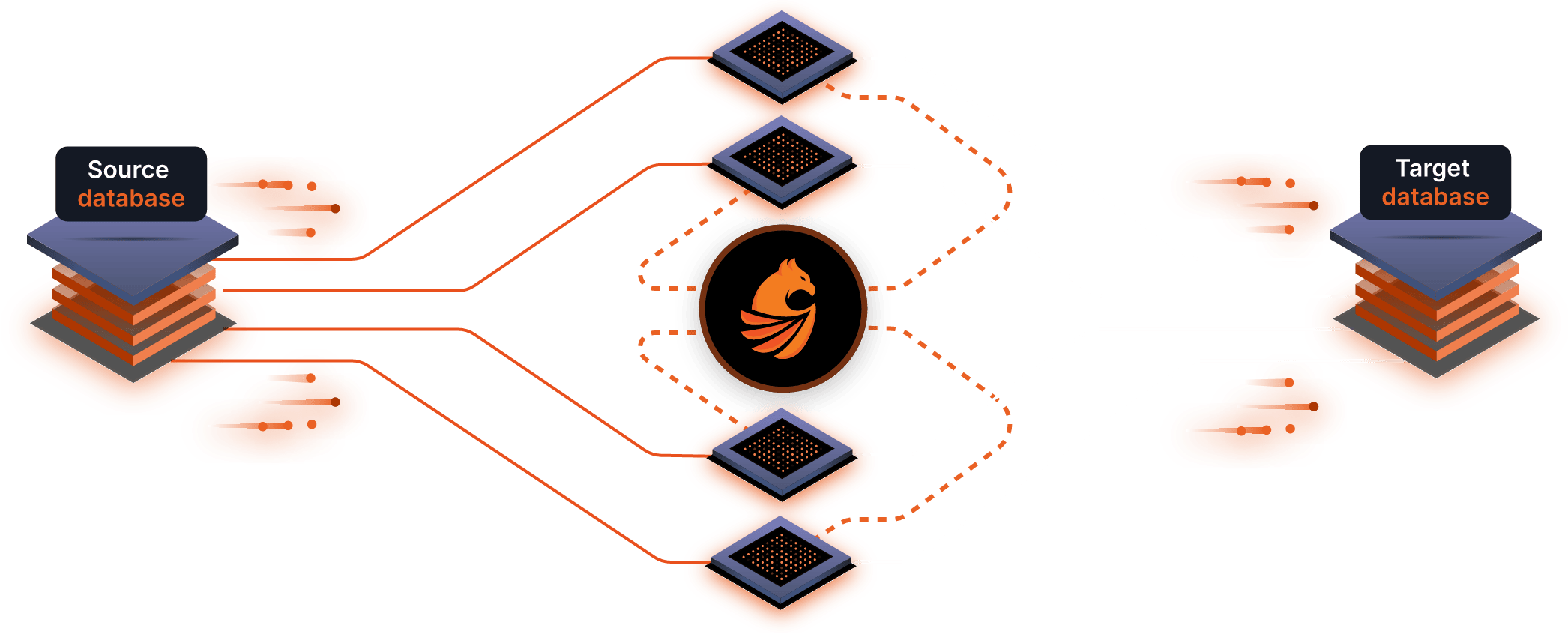
Omni Loader discovers the shape of the source, splits the work where it helps, and keeps tables and slices moving concurrently. The result is a migration that exposes progress instead of hiding it behind one oversized job.
Independent work units let small tables finish while the largest tables continue to be sliced.
Checkpoints preserve completed work so recovery stays targeted when a slice or destination needs attention.
Heterogeneous estates
From operational databases to warehouses, lakes, and files, Omni Loader keeps source selection, target preparation, parallel movement, and verification in the same migration plan.
One movement engine
Omni Loader is built for the work around the copy itself: understanding the source, preparing the target, selecting the right loading route, and proving that the result is ready to use.
Operational migrations
Move tables between heterogeneous engines while mapping schemas, types, indexes, sequences, counters, and foreign keys as part of the same project.
Review supported databasesAnalytics delivery
Turn row-oriented source data into target-ready files, stage them in cloud or local storage, and let the destination ingest in parallel.
Explore staged ingestionReshaping at scale
Combine aliased source catalogs into one target, filter what moves, or externalize large binary values to object storage during the migration pass.
See migration patterns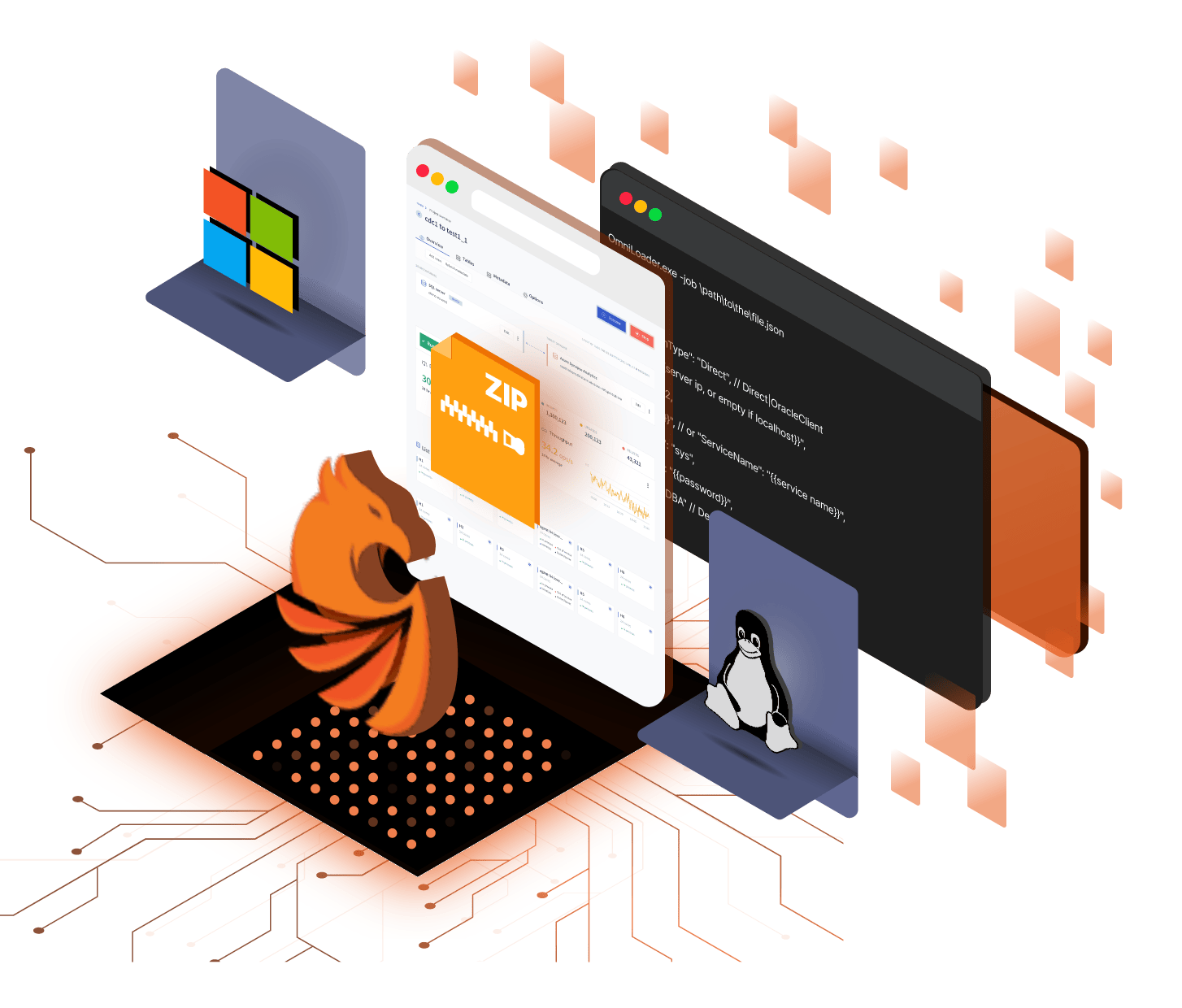
Deploy where the work lives
Run agents close to the source and destination, use local credentials and network paths, and keep the row movement on infrastructure you control. Omni Loader coordinates the plan without turning the control plane into a data bottleneck.
See deployment optionsA runbook your team can use
Large migrations become easier to operate when each decision has a place in the run. Omni Loader keeps discovery, configuration, movement, recovery, and validation connected instead of leaving the critical details in separate scripts and spreadsheets.
The result is not just a copied database.
It is a reviewed target, a recorded execution path, and a validation result the migration team can use to make the cutover decision.
Inspect metadata, table sizes, keys, partitions, object dependencies, and the limits of both ends of the path.
Select tables and columns, map names and types, choose creation policy, define filters, and scope exceptions to the tables that need them.
Run independent tables and bounded slices concurrently, using the writer and staging strategy that fits each target.
Review counts, table hashes, or record-level comparisons, inspect differences, and decide when the target is ready for cutover.
Validation that stays visible
Counts tell you whether the shape matches. Hashes and record-level comparison tell you where it does not. Omni Loader turns differences into a reviewable result and lets the team decide what to repair before cutover.
The target is ready when the evidence says it is.
Keep the run history, comparison scope, and exceptions together with the migration plan.

Operational control
The best migration speed is the speed your infrastructure can sustain. Start with practical defaults, measure the full path, and make the exceptional choices visible to the operator.
Set worker concurrency, bandwidth, batches, buffers, and ingestion capacity around the source, network, and target limits you need to respect.
Follow status at the run, stage, table, and slice level. Completed work stays accounted for while supported failed tasks can be cleaned up and replayed.
Save the migration plan, run it from the console or scheduler, keep configuration in source control, and retain the evidence needed for review.
Adapt to the destination
Bulk APIs, multi-row SQL, direct writers, and native ingestion are implementation details the platform can choose per destination. You get a measured path with clear controls for workers, batches, buffers, and pressure.

One executable migration plan
Read source and target metadata, sizes, partitions, and object dependencies.
Select data, map names and types, preview DDL, and set table overrides.
Slice work, choose adaptive writers, and stage cloud ingestion in parallel.
Create dependent objects, validate results, and review run history and differences.
Tell us the source, destination, data volume, and migration window.