A new analytics platform needs history
The warehouse is ready, dashboards are waiting, and years of source data must arrive before incremental pipelines become useful.
OLTP and OLAP are different machines for different jobs. Loading one into the other usually means building an ETL pipeline. With Omni Loader, you don't build the pipeline. You skip it.
 Operational dataTyped rows
 WarehouseParallel ingest
 OLTP stores events as rows. Perfect for "save this order." But ask the same database to scan five years of those rows for an aggregate, and every query reads millions of records. That's the wall analytics teams hit.
Built for analytical destinations
Read rows, map types, create appropriately sized files, and feed the warehouse or lake through its preferred ingestion route.

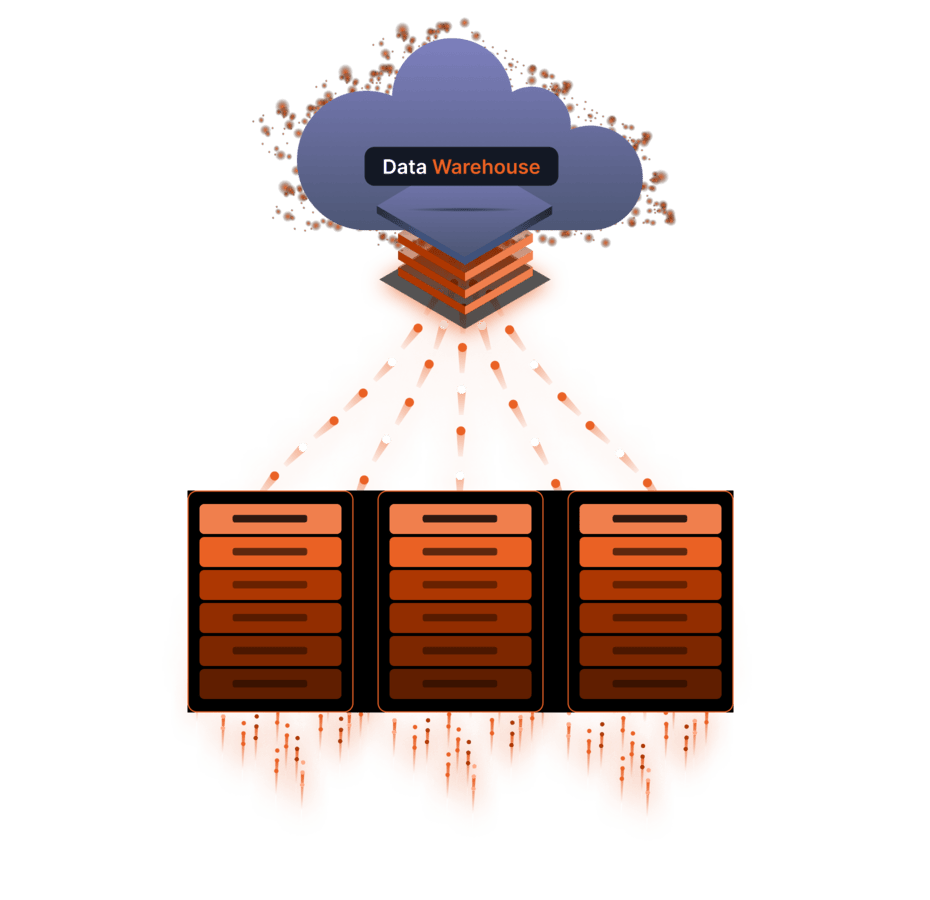
Warehouses use columnar storage. Data is organized column-by-column instead of row-by-row. That's what makes aggregation fast and compression aggressive. It also means they don't want INSERTs.
They want prepared files in blob storage, ingested in parallel. That's the protocol. Anything else is fighting the architecture.
The files have to be sized just right (usually 100 to 200 MB each), so a single big table needs to land as many files, not one giant blob.
Warehouses accept CSV, Parquet, ORC, or Avro. Omni Loader writes CSV and Parquet, compressed (GZIP for CSV; GZIP or Snappy for Parquet) or uncompressed.
Getting there from row-based source data is a sequence of dull, error-prone steps: read the rows, map the types, pivot row-to-column, compress, upload to lake storage, signal the warehouse to ingest. Every step is its own chance to break the pipeline.
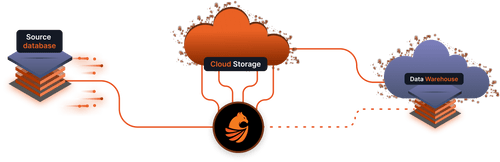
Omni Loader does all of it. From your seat it's a simple copy from A to B; underneath, it's a real warehouse loader doing real warehouse loader work.
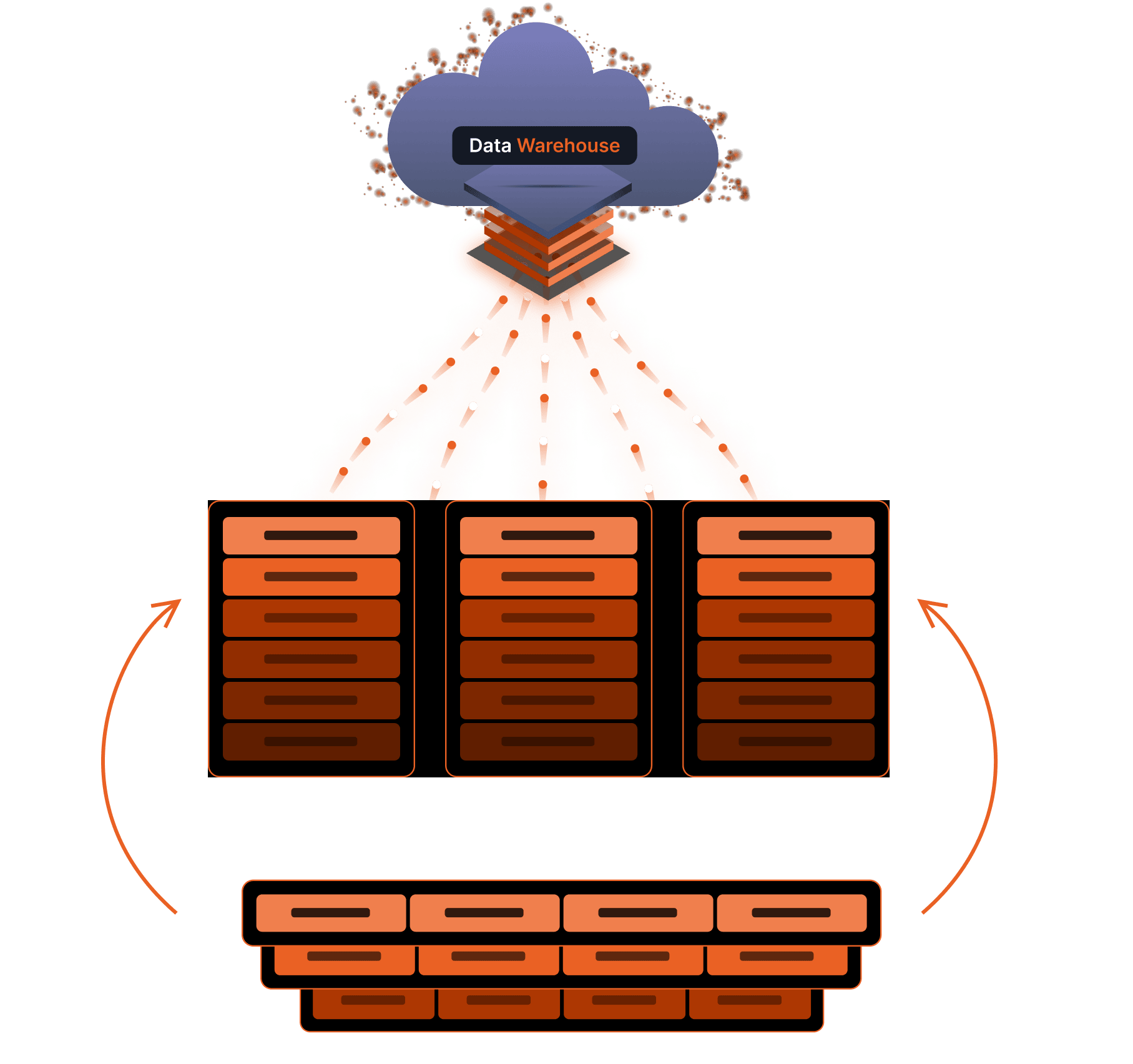
Read, pivot, compress, upload, ingest. One process. One license. The pipeline you would have built (and would have had to maintain) is built into Omni Loader.
The ingestion-shape problem
Operational databases are built to save and retrieve individual rows. Warehouses and lakehouses are built to scan columns across enormous datasets. Moving data between them is not just a connection problem; it is a change in the shape and delivery protocol the destination expects.
Teams often discover this halfway through a migration. Row-by-row loading works in the proof of concept, then collapses when years of history meet the real target. The “simple copy” becomes an ETL pipeline assembled from exporters, conversion scripts, object storage, compression, and warehouse-specific load commands.
Turn operational rows into right-sized, target-native ingestion units and hydrate the analytics platform without inheriting a one-off ETL pipeline.
You are here when…
The warehouse is ready, dashboards are waiting, and years of source data must arrive before incremental pipelines become useful.
The target is designed to ingest many prepared files in parallel, but the current path feeds it one statement or one oversized export at a time.
Separate steps for mapping, file creation, compression, upload, and ingestion now need retries, observability, credentials, and an owner.
Rows are exported, reformatted, split, compressed, uploaded, and finally submitted to the warehouse. Every boundary introduces another temporary format, credential, log, retry rule, and opportunity for counts or types to drift.
Omni Loader reads and maps source rows, writes CSV or Parquet, applies supported compression, sizes work into parallel files, uploads to lake storage, and invokes the destination ingestion path. The mechanics remain target-specific; the operation remains one migration.
Use this capability when
Progress you can see
Feed the destination through the bulk protocol it was designed to scale, with multiple right-sized files in flight.
Track read, conversion, compression, staging, and ingestion as parts of one run instead of independent scripts.
Check counts, nulls, precision, timestamps, partition layout, and representative queries, because files arriving in object storage does not prove that the analytical contract survived.
For an initial or periodic full hydration, the best architecture may be the one you do not have to maintain afterward. Prepare the files, drive native ingestion, validate the analytical contract, and leave the destination ready for the workloads that justified it.
Tell us what you're moving. We'll get it done.