How the work gets done
Build a dependency-aware model, map Oracle types and built-ins, and turn packages and procedural objects into PL/pgSQL where possible. Emulation and redesign decisions stay visible in the generated result.
Translate Oracle schemas and PL/SQL into PostgreSQL, then generate tests that compare source and target behavior.
The job to be done
A migration becomes expensive when every object arrives as a separate mystery. Start with the workload as a whole, then sort the result into three useful categories: what can move directly, what needs adaptation, and what deserves a deliberate engineering decision.
For this path, that means understanding Oracle schemas, built-ins, data types, dependencies, packages, procedures, functions, and triggers. and producing PostgreSQL DDL, SQL, and PL/pgSQL that fit the target database model.. The differences that could affect production behavior are surfaced while the team can still act on them, not after they have become deployment surprises.
Why this path is difficult
The hard part is rarely table DDL. It is the interaction between Oracle built-ins, implicit conversions, package state, exception paths, sequences, triggers, and dependency order. A script that looks translated can still behave differently when a production procedure reaches an uncommon branch.
How the work gets done
Build a dependency-aware model, map Oracle types and built-ins, and turn packages and procedural objects into PL/pgSQL where possible. Emulation and redesign decisions stay visible in the generated result.
Where it helps
A finance or operations schema with packages, reporting views, triggers, and shared utility functions can be assessed as one system. Reviewers can start with the objects that affect the most dependents.
The payoff
The translation runs up front, then becomes an object inventory, coverage view, complexity signal, and findings list. You see the work before you plan it.
Oracle tables, views, data types, constraints, and SQL become PostgreSQL-compatible DDL and queries. PL/SQL packages, procedures, functions, and triggers become PL/pgSQL or explicit emulations where PostgreSQL needs a different construct.
Generated tests compare source and target behavior for tables, views, functions, and procedures. Performance is recorded alongside correctness, so a passing translation is not mistaken for a fast one.
Where the work happens
These are the source patterns that usually create rework. Each card explains the target-aware treatment, so your team can see what is being adapted and where a decision is still required instead of discovering a mismatch during deployment.
Map Oracle numeric, date, character, large-object, and user-defined types into PostgreSQL equivalents while keeping precision and conversion behavior visible for testing.
Translate Oracle-specific functions, null handling, string operations, date arithmetic, and old-style joins into PostgreSQL expressions instead of leaving a search-and-replace cleanup for the team.
Break package-contained logic into PostgreSQL-compatible routines, preserve call relationships, and keep nested procedure behavior in the dependency model.
Carry value generation, trigger firing, default expressions, and dependent object order into the target schema so inserts and side effects are tested together.
Translate partition definitions and deeply nested views while preserving references, then generate source-versus-target tests for the result sets that matter.
Proof
Run agreed source-versus-target tests against representative inputs, with every result, exception, and owner attached to the affected object.
The path to confidence
Assessment, translation, and testing stay connected, so your team can see what the software handled automatically, what it changed to fit the target, and which decisions still need a human owner.
Connect or upload Oracle code. The parser reads every object, builds dependencies, scores complexity, and shows where PostgreSQL needs a different construct.
Relational and procedural objects are translated together, with source semantics kept in context. Where PostgreSQL has no direct equivalent, the engine uses a supported rewrite or names the gap clearly.
Deploy the generated target objects to staging, inspect the differences, run generated tests, and use the results to focus engineering time on the exceptions that matter.
The source and target
A script that runs is not proof that a migration worked. The real question is what the target needed in order to preserve the workload’s intent, and whether those changes have been tested. SQL Tran keeps that answer visible at the object level.
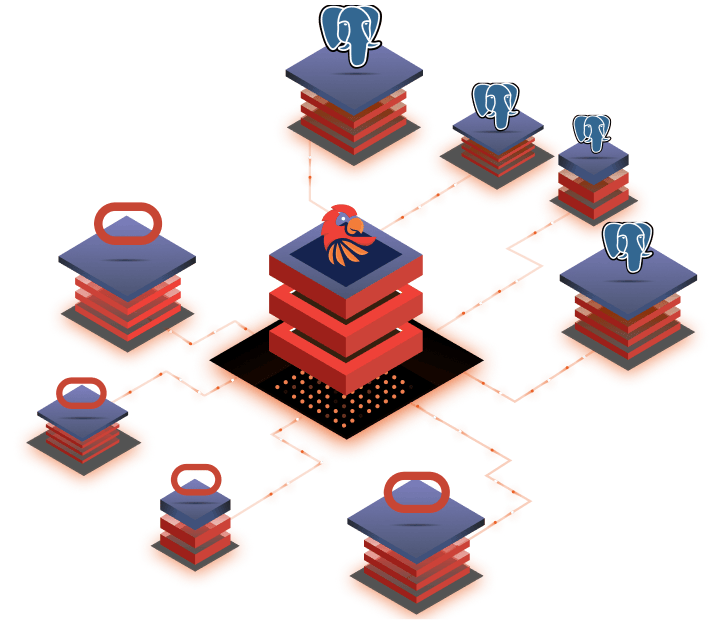
Oracle schemas, built-ins, data types, dependencies, packages, procedures, functions, and triggers.
PostgreSQL DDL, SQL, and PL/pgSQL that fit the target database model.
Your review list
Every migration has a boundary. Surface it early, and reviewers can spend their time on the few decisions that shape the result instead of rereading thousands of generated lines.
Your working set
Take the next step
Run the assessment against your objects, dependencies, and target version. We do that by running full translation and exposing the real result. That tells you exactly what translates cleanly, what changes, and what needs your attention.
Start the assessment